Humanoid Robots - Future Comrades
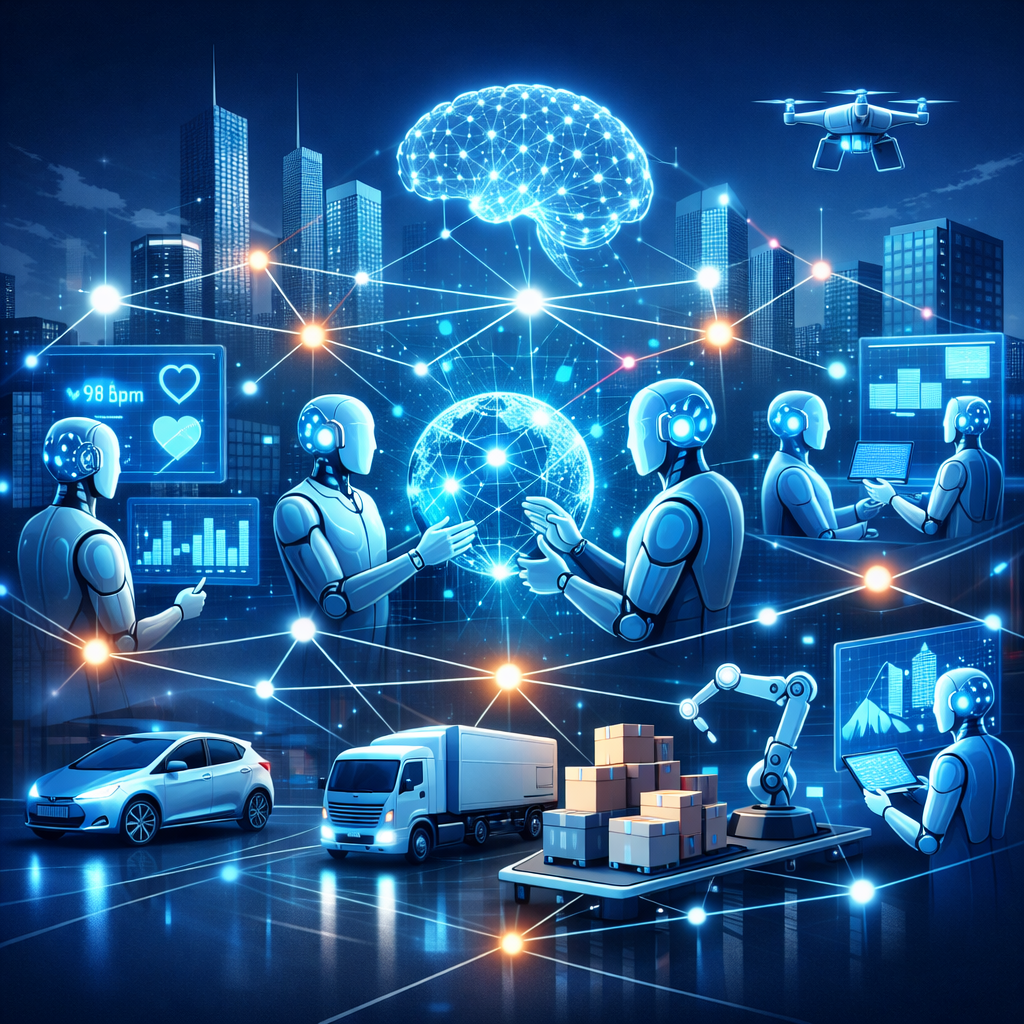
The idea of human-like machines has always captured our imagination. Today, humanoid robots are a reality that is evolving at an astonishing pace. This article aims to explore the world of these robots, from their definition and history, through their most prominent achievements and applications to the challenges and prospects.
What are humanoid robots?
A humanoid robot is a robot designed to mimic the shape and functions of the human body, with a torso, head, arms, and legs. This design aims to enable robots to work efficiently in environments designed for humans, use human tools, and navigate the spaces we live in without major modifications.
These robots are equipped with advanced components such as:
-
Actuators: To control motion and mimic human agility.
-
Sensors: such as cameras, microphones, and touch sensors, to simulate human senses and perceive the environment.
Computing and Artificial Intelligence Systems: To enable cognition, planning, and autonomous decision-making. Thanks to artificial intelligence and machine learning, these robots adapt to real-world scenarios after training in simulated environments. For example, Atlas robots from Boston Dynamics learn dynamic movements in simulated environments and then transfer that learning to physical robots.
From fiction to reality, humanoid
robots have evolved through decades of research, driven by scientific curiosity. The shift from fantasy to reality began in the twentieth century as robotics and artificial intelligence advanced.
Early Beginnings: WABOT-1 1972
Developed by Waseda University in Japan in 1972, WABOT-1 is the first full-size, humanoid intelligent robot. He was able to walk, talk, and see, proving that human abilities could be simulated.
Honda's Pioneering Efforts: E, PSeries, and ASIMO
In 1986, Honda began a project to develop human-like animated robots. The E-series prototypes focused on leg movement, followed by the P-series full-body robots. These efforts culminated in the launch of ASIMO in 2000, which has become a global icon with its ability to run, climb stairs and interact with humans.
The Age of Artificial Intelligence and Machine Learning The second decade of the 21st century and beyond
The second decade of the 21st century saw a boom in the development of humanoid robots, driven by artificial intelligence and machine learning. Sophisticated models such as:
-
Atlas from Boston Dynamics: Known for its dynamic balance and complex movements, Atlas evolved into an electric version.
-
Tesla's Optimus: Aimed at mass production and precise handling of objects, its second version has demonstrated the ability to handle sensitive objects.
-
Figure 02 Figure 02: Integrates with OpenAI's AI for seamless speech, understanding, and interaction.
-
Unitree G1: A step towards affordable humanoid robots.
-
1X NEO Beta: Focuses on home services with natural movements.
These modern models are platforms for learning and adaptation, capable of operating in unstructured environments and interacting with humans, representing a quantum leap in the journey of humanoid robots.
Humanoid Robot Applications: Humanoid
robot applications go beyond entertainment shows, opening up broad horizons in sectors such as industry, healthcare, services, and space exploration. These applications can be categorized based on motion control requirements:
-
Industrial Manufacturing Minimum Motion Control Requirements
In organized factory environments, humanoid robots play vital roles in assembly, quality inspection, and hazardous material handling. These environments are ideal for initial deployment and data collection. -
Commercial service environments
in semi-organized settings that require human interaction Shops, hotels, hospitals, humanoid robots help as guides or assistants. The challenge is to reliably interact and navigate changing environments. -
Harsh Operational Environments
Humanoid robots are ideal for working in dangerous or hard-to-reach locations to respond to disasters, chemical plants, space exploration. These tasks require environmental adaptation and specialized movement capabilities. -
Home Services Higher Motion Control Requirements
In unpredictable home environments, humanoid robots can help care for the elderly and household chores. This requires advanced adaptation abilities, precise manipulation skills, and natural interaction.
It also plays a role in research and development as platforms to test AI algorithms, develop advanced control methods, and help students and researchers understand the principles of robotics in practice.
Challenges for humanoid robots
Despite advancement, humanoid robots face challenges that hinder their spread:
First, technical challenges
-
Balance and movement: Maintaining dynamic balance while moving is a challenge, especially in changing environments, and requires powerful control systems and motors.
-
Battery life and power: Robots require a lot of power. Achieving long battery life for continuous work is still an obstacle.
-
Fine motor skills: Handling delicate or sensitive objects is still difficult. The development of robotic hands that mimic the flexibility of the human hand is an active area of research.
-
Artificial Intelligence and Inference: Despite the advancement of AI, robots still struggle to understand the complex human context, make logical decisions, and learn from mistakes as efficiently as humans.
Second, ethical and social challenges
-
Job displacement: The proliferation of robots raises concerns about their displacement of human jobs, especially in sectors that rely on manual labor.
-
Privacy and security: The ability of robots to collect data raises privacy issues. Ensuring their safety and preventing their harmful use is an ethical and legal challenge.
-
The human-robot relationship: How will humans interact with robot-like robots?
Third, high-cost economic challenges:
The cost of developing and manufacturing robots remains high, but expectations indicate that it will decline with mass production.
The future of humanoid robots.
The future of humanoid robots is promising. As AI and machine learning advance, these robots will play increasingly important roles. Projections point to a major shift in the coming years:
-
Mass production: Companies like Tesla are moving towards mass production of robots by 2026-2028, which will reduce costs and increase their reach.
-
From factories to homes: The future trend is to integrate robots into homes to help the elderly and daily businesses.
-
Supporting the elderly: As the number of older people grows, robots can provide vital support in care and assistance with mobility and companionship.
-
Dangerous and impossible missions: Robots will continue to perform hazardous tasks in response to disasters, space exploration where they can withstand extreme conditions.
-
Continuous learning and adaptation: Robots will become more capable of learning, adapting, and interacting with humans thanks to the advancements of artificial intelligence.
Humanoid robots are not just a technology, but a revolution that is reshaping our lives. From WABOT-1 to ASIMO, and from Atlas to Optimus, it's come a long way. Despite the challenges, their possibilities are limitless, and they promise a future where they are companions and helpers, increasing our capabilities and opening up new horizons for exploration and innovation.