 English
 العربية


Microsoft Independent Proxies Copilot Studio.
In the past few years, the term artificial intelligence has become an integral part of our daily lives. We started using it to ask questions, write emails, and even generate images. However, Microsoft's recent announcement represents a quantum leap beyond just chatting with a machine; we're talking about autonomous agents. This announcement is not just a simple technical update, it is a radical change in how companies operate and manage complex tasks. In this article, we'll navigate this technology in a simple and clear way, away from the technical complexities, to learn how these tools will change the future of work.
From Assistant to Agent: What's the Difference?
To understand the significance of this ad, we must first differentiate between what we used to use and what Microsoft is offering now. Until recently, Copilot was a co-pilot — waiting for you to do it. If you want to summarize a meeting, you need to ask them. If you want to write a report, you need to provide it with data and guide it.
An independent agent is like a digital employee who doesn't wait for orders all the time. Let's imagine the difference with a simple example from our everyday lives: a traditional assistant is like a GPS device in your car, it tells you where to go but you are the one who drives the car. An independent dealership is like a self-driving car: you set the destination for it, it drives, it avoids traffic, makes decisions in turns, and it gets you to your goal while you focus on other things.
Copilot Studio Platform Factory that builds your agents.
Microsoft has announced major updates to a platform called Copilot Studio. This platform serves as a factory that allows businesses to build their own agents. The good thing is that building these proxies doesn't necessarily require an army of professional programmers; the platform is designed to be easy to use, as business professionals can build proxies using simple natural language.
Through this platform, the company can say to the AI: You are now an agent responsible for tracking shipments. If a shipment from a specific supplier is delayed, find a replacement, confirm the price, and send me a draft email to approve it. Here, AI is transformed from a program that answers questions to a system that gets things done.
The Extraordinary Abilities of Independent Agents What
Makes These Agents Truly Special?
-
Multi-tasking Fulfillment The
freelancer does not work on a secluded island. It has the ability to navigate between different Microsoft applications such as Excel, Teams, Outlook and the company's external systems. It can read an email, extract data from it and put it into a spreadsheet, and then send an alert to the team via Teams, all in one logical sequence without human intervention at every step. -
Decision Making
This is the most controversial and impressive point at the same time. New agents are equipped with the ability to think logically based on data. If an agent encounters a problem, they don't simply stop and say "I don't know," but rather try to analyze the options based on the rules that humans have set for them. For example, if it finds that the stock of a particular item has decreased, it can decide to order a new quantity if the price is within the allowable limits. -
Continuous Always-on
Unlike humans, digital agents don't need to sleep or rest. They can monitor business processes around the clock. This means that routine and tedious tasks that used to consume hours of employees' time can now be done in the background, leaving space for humans to focus on creativity and innovation.
Supply Chain Management:
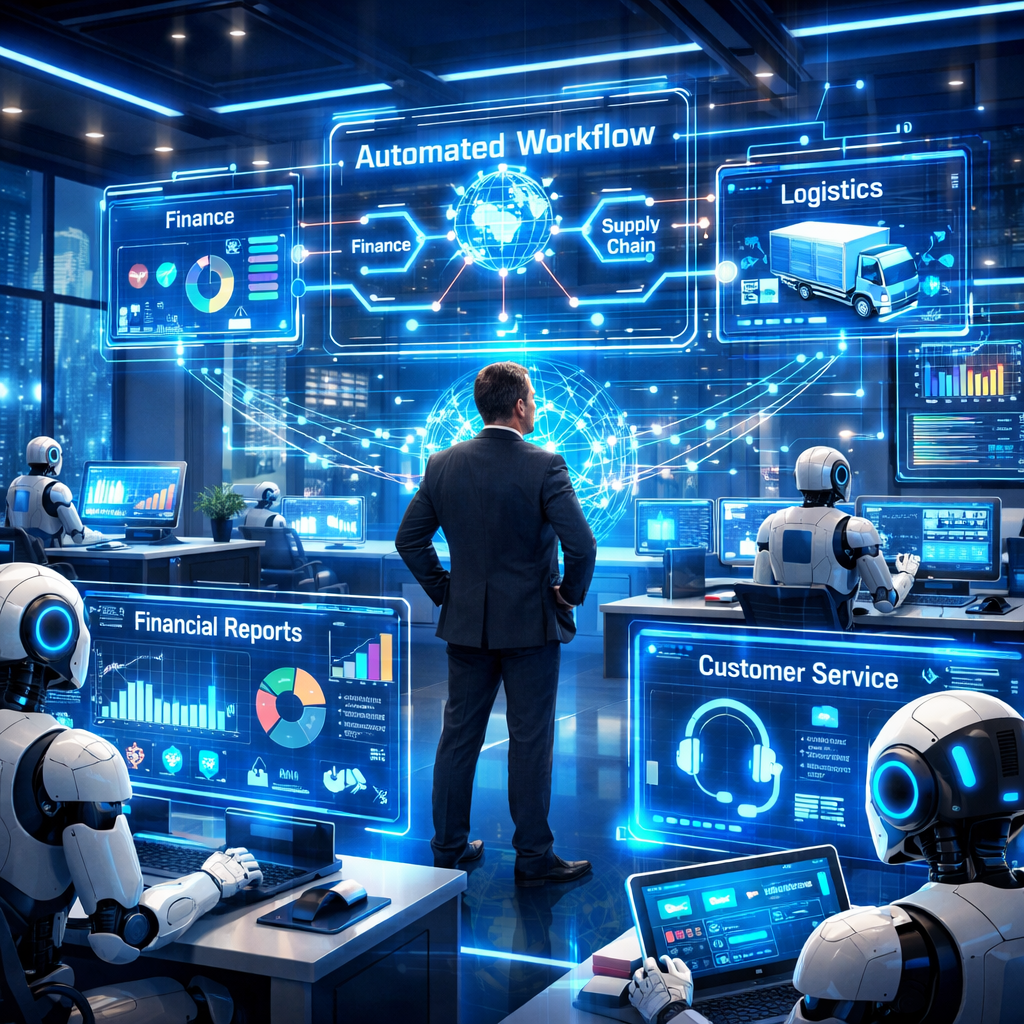
One of the most important areas that Microsoft focused on in its announcement is Supply Chain Management. For those who don't know, supply chains are the complex process that ensures that a product gets from the raw material to the consumer's hands. It is a process full of challenges: ship delays, material shortages, price changes, and supplier problems.
How does an independent agent help here?
-
Smart Monitoring: The agent monitors the movement of shipments around the world moment by moment. If a hurricane occurs in a certain area that may affect the ships' route, the agent is aware of it immediately before the human staff member reads the news in the newspapers.
-
Solve problems semi-autonomously: Once the problem is detected, the agent starts looking for solutions. He may contact other suppliers registered in the database, compare their prices and delivery dates, and provide a ready-made report to the manager in which he says: There is an expected delay, I have found three alternatives, the first is the fastest and the second is the cheapest, which one do you choose?.
-
Reduce human error: In complex calculations and data entry, AI outperforms humans in accuracy. This reduces the chances of a sudden shortage of inventory or unnecessary over-requisition.
Other use cases in the business
world In addition to supply chains, there are other areas that will benefit tremendously:
-
Sales An independent agent can search for leads, study their needs, send them personalized messages, and even schedule meetings without the sales rep intervening until the crucial moment of closing the deal.
-
Customer Service Instead of traditional bots that give canned answers, IRs can solve complex customer problems, such as tracking refunds or changing booking details, by logging into the company's systems and making the necessary changes.
-
Agents can review invoices, ensure that they match contracts, and detect any fraud attempts or calculation errors automatically and instantly.
Will AI replace humans?
This is the question that comes to everyone's mind. The answer that Microsoft and the experts are trying to emphasize is: no, it will enhance their capabilities. The new concept is co-working
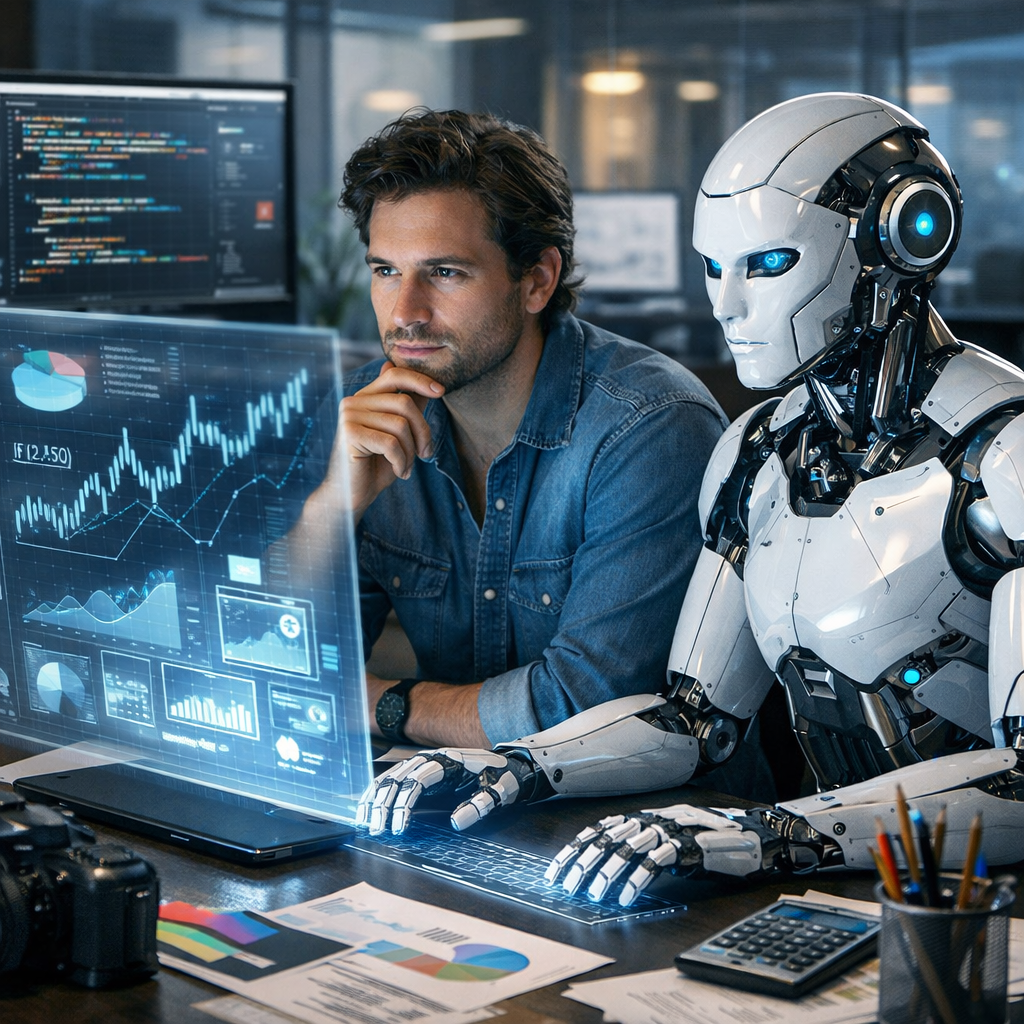
The goal of independent agents is to rid humans of the cumbersome routine of Drudgery. Imagine an employee who spends 4 hours a day transferring data from emails to Excel spreadsheets; this employee is not using their real human intelligence for this task. When the agent performs this task, the employee's role shifts to a supervisor or manager of the process, focusing on making strategic decisions and building human relationships that a machine cannot.
Microsoft emphasizes the principle of Human-in-the-loop. This means that the agent, no matter how independent, operates within the limits and controls set by humans, and in sensitive tasks, the final decision is made only with human consent.
Challenges and concerns: The other side of the picture
, of course, this technique is not without its challenges.
-
First, there is the issue of security and privacy. Giving an AI agent the ability to access your email and your company's financial data requires very strict security standards. Microsoft is aware of this, and emphasizes that data remains within the company's boundaries and is not used to train generic AI models.
-
Second, there is the problem of hallucinations that can sometimes affect AI, as it can provide false information with great confidence. In the business world, a single mistake in numbers can cost millions. Therefore, building strong Guardrails is key before launching these agents in the real environment. This includes setting clear boundaries on what an agent can and can't do, as well as the need for periodic human review to make sure the agent is on track.
-
Third, the issue of integration with legacy systems comes to the fore. Many large companies still rely on outdated software that may not easily connect with modern AI technologies. This is where Copilot Studio tries to bridge this gap by providing connectors that facilitate the communication between the smart agent and traditional systems, making the transition to automation smoother and less expensive.
How are companies preparing for this transformation?
To capitalize on this revolution, companies don't need to completely change their systems tomorrow, but rather start with thoughtful steps:
-
Identify repetitive tasks: Look for time-consuming processes that rely on clear rules.
-
Data Organization: AI needs clean and organized data to work efficiently.
-
Employee training: Not on programming, but on how to manage and collaborate with these digital agents.
Microsoft's announcement of independent agents is a clear signal that we are moving from the era of AI as a search engine to the era of AI as a workforce. These tools will allow small businesses to operate as efficiently as large companies, and large companies to innovate at a speed that was never possible before.
Ultimately, AI remains a tool, and its true value depends on how we use it. Independent agents are not here to take our place, but to give us our most precious possession: time. It's time to think, create, and build a better future with the help of our new digital partners.
Looking ahead.
Let's imagine what your workday will look like a few years from now thanks to these independent agents. You start your day by opening your computer, only to find a brief report from your personal agent that says, "Good morning, you reviewed 500 emails overnight, analyzed 3 supply chain issues, and scheduled 4 important meetings for you. One decision that needs your approval is related to switching suppliers in Asia due to an expected shipping delay.
In this scenario, you don't start your day by digging through piles of data and messages, but you start where the AI left off. Your role here is to be the leader who guides this digital workforce. This transformation will redefine productivity; productivity will not be measured by the number of hours you spend behind the desk, but by the quality of the decisions you make and the added value you provide to your company and your customers.
Whether you're a small business owner or an employee of a large organization, understanding this technology today is your first step to being a part of the future of work that is now taking shape before our eyes. Preparing for this future does not require complex programming skills, but rather a flexible mindset capable of adapting to change, and a curiosity to explore how these tools can make our careers easier and more creative.


Add New Comment