The Home Robot Revolution: Will We See a Robot in Every Home Soon?
The idea of home robots has always been part of humanity's dreams, embodied in science fiction movies like The Jetsons where machines do all the hard housework. What seemed like a far-fetched fantasy is now becoming a reality, with the world of robotics and artificial intelligence rapidly evolving. Robots are no longer just huge industrial tools that work in factories, they are getting smaller and smarter, and moving at a steady pace towards our homes. Are we on the cusp of a real revolution that will soon make the presence of a robot in every home a reality?
From Fantasy to Reality: The Definition of a Home Robot
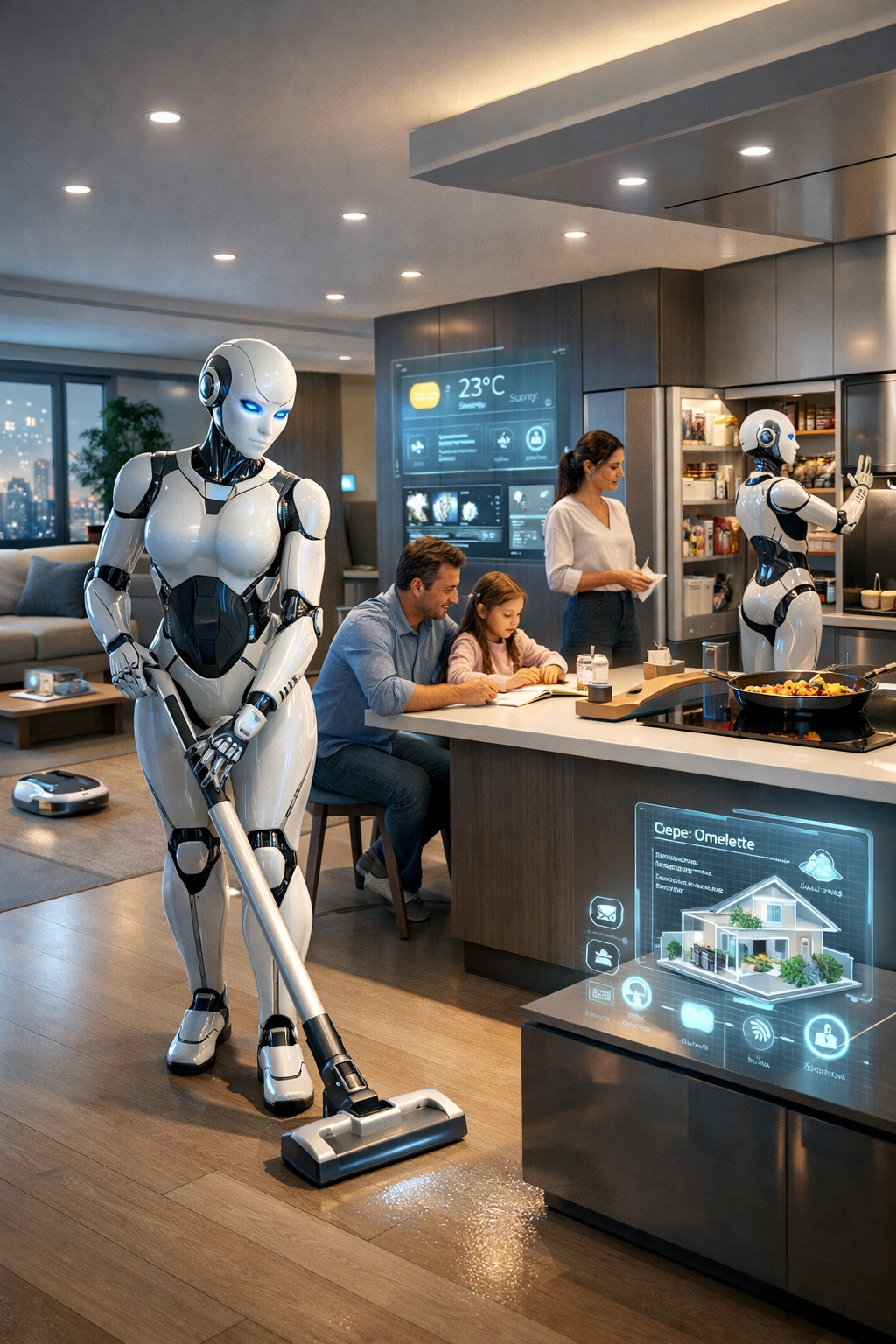
When we talk about home robots, a smart vacuum cleaner that roams the floors to clean them may immediately come to mind. Indeed, these vacuums, like the Roomba, were the first spark to introduce the concept of robots into our homes. But today's home robot is much more than just cleaning. It is a smart assistant, designed to perform a wide range of tasks aimed at simplifying our daily lives and saving time and effort. These robots use advanced technologies such as artificial intelligence, computer vision, and machine learning, to be able to understand and interact with their environment effectively.
Home Robots Today: A Glimpse of the Present
Recent years have seen the emergence of multiple types of home robots, each specialized in a specific task:
-
Robotic vacuum cleaners: As mentioned, they are the most prevalent and common. These vacuums have evolved to include features such as smart home mapping, automatic dirt vacuuming, and even floor mopping.
-
Kitchen robots: Some companies are starting to develop robots that can help prepare food, from chopping vegetables to mixing ingredients and even cooking simple meals. These robots aim to make the cooking process easier and faster, especially for people who are busy or have difficulty with some kitchen tasks.
-
Garden care robots: such as lawn mowers that work autonomously to keep your home garden tidy without human intervention.
-
Social and Companion Robots: This class of robots is designed to interact with humans, provide emotional support, and help with simple tasks. It can be a companion for the elderly, an interactive educational tool for children, or even just a source of entertainment through conversation or games.
The Next Revolution: The Near Future brings with it
amazing developments in the world of home robots, as companies move towards producing more capable and versatile robots, capable of performing complex and multiple tasks. CES in Las Vegas, a window into the future of technology, showcased many of these promising innovations in 2026.
-
One of the most prominent of these robots is 1
X Technologies' NEO robot:
This human robot is one of the most promising models. It has a sleek design and a soft texture, and it works quietly. Not only does his role include simple tasks, but he can perform complex household chores such as cleaning bathrooms, arranging clothes, and even helping in the kitchen. NEO relies on artificial intelligence to learn from and adapt to its environment, making it a versatile home assistant. -
SwitchBot Onero H1 Robot: While not fully humanoid, this robot has detailed arms and a wheelbase that gives it flexibility in movement
. Featuring a facial display that allows it to express and interact, it uses a multisensory cognitive system called OmniSense VLA to recognize objects and understand how to deal with them. The Onero H1 can interact with other smart home devices, making it the hub of an all-in-one smart home. -
Tesla Bot or Optimus:
Tesla, known for its electric cars, is seeking to enter the world of human robots. Optimus robots are meant to perform dangerous, repetitive, or tedious tasks that humans don't want to do. While its initial focus may be industrial, expectations suggest it could be adapted for household tasks in the future, which could be a game-changer.
What is
driving this rapid development in the world of home robotics? There are several key technologies that act as drivers of this revolution:
-
Generative AI: This type of AI allows robots to understand natural voice commands, interact in a smoother and smarter way, and even generate creative responses. This brings interacting with robots closer to interacting with humans.
-
Computer Vision: It enables robots to see and interpret their environment. It can recognize objects, locate them, avoid obstacles, and even read human facial expressions. This is essential for performing complex tasks safely and effectively within the home.
-
Machine Learning: It allows robots to learn from the experience and improve its performance over time. The more the robot is used, the more efficient it becomes to perform its tasks.
-
Evolution of devices and sensors: Sensors are becoming more precise, smaller, and less expensive, allowing them to be integrated into robots to collect massive amounts of data about the surrounding environment.
-
Robot as a Service - RaaS: This new economic model may accelerate the spread of home robots. Instead of buying an expensive robot, consumers can rent it for a monthly fee. This lowers the cost barrier and makes robots accessible to a wider segment of people.
Challenges and Concerns: Is Everything Pink?
Despite the big promise, the home robot revolution faces some challenges and concerns that need to be addressed:
-
High cost: Advanced home robots are still expensive for most consumers. While the NEO robot can be booked with a deposit of $200, the final price will be much higher. However, costs are expected to decrease as production increases and technological advancements.
-
Privacy and security: Many home robots are equipped with cameras, microphones, and sensors to collect data about the surrounding environment. This raises serious concerns about users' privacy and data security. Companies must develop strict standards to protect this data, and users should be aware of the potential risks.
-
Over-reliance: Over-reliance on robots to perform daily tasks may lead to a reduction in human skills and total reliance on technology, which can affect certain aspects of daily life.
-
Breakdowns and maintenance: Like any electronic device, robots can malfunction, and their maintenance can be complex and costly.
-
Adapt to the home environment: Homes are not uniform factories. Each house has a different design, different furniture, and different obstacles. Designing a robot that can effectively adapt to these diverse environments is a major engineering challenge.
Will we see a robot in every house soon?
Given the rapid developments and innovations we are witnessing, the answer to this question seems to be yes, but not necessarily in the very near future. The forecast indicates exponential growth in the home robots market. According to some research, the demand in the personal home robot market is expected to reach 39 million robots per year by 2024, and the number of homes with robots will reach 79 million homes worldwide by 2025.
Home robots won't replace humans, but will serve as powerful helpers that give us back our lost time in routine and boring chores. It will give us the opportunity to focus on the activities that matter most, whether it's spending time with family, pursuing hobbies, or working on creative projects. They are not just tools, they are potential partners in building a more comfortable and efficient future.
As costs continue to fall, capabilities improve, and awareness increases, home robots are likely to become an integral part of our lives, just as smartphones and computers have become. The revolution has already begun, and the future holds us smarter homes, and easier lives thanks to these amazing robotic creatures.