 English
 العربية

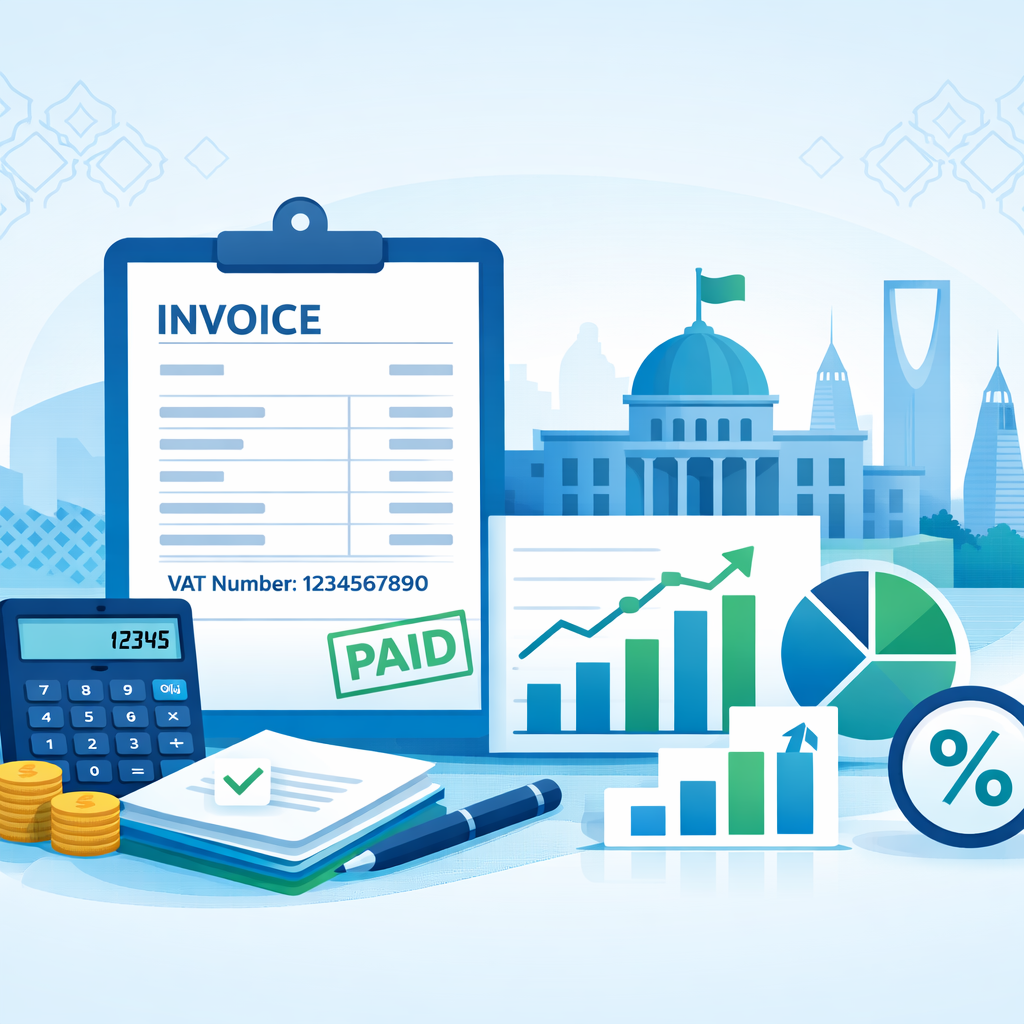
Saudi Tax Figure.
In today's business world, understanding tax systems has become essential, even for non-specialists. In Saudi Arabia, the tax number plays a pivotal role in this system. So what is this number, why is it important, and how can individuals and businesses get or verify it? This article will provide you with simple and clear answers to these questions.
What is a tax number?
The tax number is a unique digital identity issued to individuals and companies registered with the Zakat, Tax and Customs Authority in the Kingdom of Saudi Arabia. It can be likened to the national number of the citizen or the commercial registration number of the establishment, but it is only concerned with the tax aspect. This figure ensures that every economic entity complies with the applicable tax laws and regulations. The tax number in Saudi Arabia consists of 15 digits, which is a distinctive number that helps government agencies track economic activities and analyze financial statements accurately. The existence of this figure enhances transparency and credibility in business transactions and supports the national economy by financing vital government projects.
The importance of the tax number
The role of the tax number is not limited to being just an identification number, but extends to include several vital aspects:
-
Enhanced transparency: It helps regulators track the economic activities of businesses and individuals, reducing tax evasion and ensuring fairness.
-
Facilitate financial transactions: It allows businesses to file tax returns easily and efficiently, and reduces the need for complex paperwork.
-
Building credibility and trust: The presence of a tax number is a proof of a company's compliance with tax laws, which boosts the confidence of customers, investors, and financial entities such as banks.
-
Market integration: The tax number is a prerequisite for participating in government tenders and signing official contracts, which opens doors to new job opportunities for enterprises.
-
Compliance with the e-invoicing system: The tax number has become an integral part of e-invoicing, which we will talk about in detail later.
How to get a tax number in Saudi
Arabia Getting a tax number in Saudi Arabia has become an easy process and can be done electronically through the ZATCA website. Here are the basic steps:
-
Visit the official website: Start by visiting the website of the Zakat and Tax Authority Customs https://zatca.gov.sa.
-
Create a new user account: If you don't have one, create a new one. You will need to enter basic information such as name, national ID or residence number, and address.
-
Add business information: After logging in, enter the details of the business you want to get the tax number for, such as its name, business type, and address.
-
Provide contact information: Enter your phone number and email to get in touch with you when needed.
-
Provide bank account information: Provide your bank account details to facilitate tax payments or refunds.
-
Upload the required official paperwork: You will need to upload some documents such as the commercial registration, tax declaration, and social contract if applicable. Make sure to thoroughly review the list of required documents on the website.
After completing these steps and submitting the application, the TRA will review it, and if approved, your tax number will be issued. How to Verify a Tax Number Checking a tax number is crucial, whether you are an individual or a company, to ensure the credibility of transactions. You can check the tax number of any establishment or individual through the ZATCA website by following the following steps:
-
Visit the Authority' s website: Go to the Zakat, Tax and Customs Authority website https://zatca.gov.sa.
-
Choose a verification service: Find and select a tax number verification or verification service.3. Choosing to verify the VAT registration certificate: This is the common option for tax number verification.
-
Enter the necessary information: Enter the tax number you want to verify, and you may also be asked to enter the name of the company or individual.
-
Click the search button: After you enter the data, click Search to view the results and verify that the number is correct.
Update your tax number data
In case of any changes to your business data, such as a change of address or ownership, you must update your tax number data with ZATCA. This ensures the accuracy of the information and avoids any conflicts or delays in official procedures. The steps to update include:
-
Log in: Log in to your establishment's account through the Authority's portal.
-
Submit an update request: Enter the new data and explain the reason for the change.
-
Attach supporting documents: Upload documents that validate the changes, such as a new lease, a transfer document, or an updated business registration.
-
Order Follow-up: Track the status of your order until the update is officially confirmed.
Cancel your tax number
If you decide to cease your business or your business is no longer required by your tax number, you can cancel it. This process requires specific procedures to avoid legal accountability:
-
Registration on the Authority' s website: Log in to the Zakat, Tax and Customs Authority website.
-
Access tax services: Select Tax services from the list.
-
Select Cancel Registration: Select Cancel VAT Registration.
-
Complete the data and attachments: Fill in the required information and upload the necessary attachments.
-
Review and confirm the request: Review and verify all the data before confirming the cancellation request.
You must ensure that the company is not bound by the tax number or that it has ceased its activity before starting these procedures.
Delay Fines and Penalties
The Zakat, Tax and Customs Authority imposes fines on establishments that delay in registering for VAT or do not comply with legal controls. These fines can have significant negative effects on the business:
-
Additional Financial Burden: A minimum fine of SAR 10,000 will be imposed on establishments that delay registration within 30 days of reaching the mandatory registration limit. This amount may negatively impact cash flows, especially for startups.
-
Obstruction of dealing with government entities: The lack of an effective tax number may prevent the establishment from entering into government tenders or signing official contracts .
-
Low customer and investor confidence: Non-tax compliant companies may be considered unreliable, which weakens their chances of building partnerships or obtaining financing .
-
Legal Risks: Delay in registration exposes the establishment to sudden scrutiny by the Authority, which may lead to the discovery of other violations and the accumulation of fines.
-
Difficulty in rectifying the situation: The longer the delay, the more complex corrective actions, such as retroactive tax payments, become.
Tax Number and e-Invoicing The
tax number has become an essential element of the e-invoicing and VAT system in Saudi Arabia. It must be clearly listed in all e-invoices to ensure compliance with the ZATCA system.
Where the tax number appears in the e-invoice:
The tax number is usually listed at the top or bottom of the e-invoice, next to the establishment's data name, commercial registration, address.
What the e-invoice should include:
-
The supplier's name, address, and tax number.
-
The client's name if they are tax registered.
-
Issue date and invoice number.
-
Description of goods or services.
-
Total pre-tax amount, VAT value, and total amount including VAT.
-
QR code in simplified tax invoices.
Important Note: If the tax number is not on the invoice, the invoice is considered irregular, and this may result in financial fines .
Using the tax number in tax transactions:
-
Tax Returns: The tax number is used when filing returns through the Authority's portal.
-
Refund and Reconciliations: The tax number is required in transactions related to tax refunds or correction of returns.
-
Compliance verification: Third parties can use the number to verify the establishment's registration in the VAT system .
The difference between the tax number and the special number
It is important to differentiate between the tax number and the distinctive number, as many confuse them :
First: VAT Number
-
A number consisting of 15 digits is granted to establishments registered in VAT.
-
It is mainly used in VAT applications ).
-
Intended for VAT companies and establishments.
-
Enters in:
-
Issuance of electronic and tax invoices
-
Audits and audits
-
Applying for Government Tenders
-
Checking the Tax Status of the Establishment
-
Second: TIN Number
-
A number consisting of 10 digits is granted to each taxpayer an individual or an establishment when registering with the Authority.
-
It is used in various types of taxes, zakat, and general dealings with the Authority.
-
It includes individuals and establishments, whether they are subject to tax or zakat only.
-
Used for:
-
Opening a file with the Authority
-
Submission of Zakat Declarations
-
Official correspondence with the Authority
-
Payment of dues
-
Indirect Tax Registration
-
Tips to avoid mistakes
to avoid fines and delays in procedures, here are some important tips :
-
Permanent verification: Make sure that the tax number is correct before inserting it in any invoice using the official verification link from the Authority.
-
Clarity in invoices: Clearly include the tax number in the e-invoices next to the name of the establishment and the commercial registration number.
-
Record keeping: Keep electronic and paper copies of all tax invoices.
-
Instant update: Update your tax data as soon as any changes occur.
-
Periodic follow-up: Follow up on returns and pay tax obligations on time.
Some may wonder whether non-business owners are entitled to a tax number? Yes, if an individual is making taxable income according to the Authority's regulations, he must register when he reaches the binding limit. This number is used to identify individuals in terms of tax and meet their obligations.
Tax number of major Saudi banks
Many business owners need to know the tax number of major banks when issuing invoices or financial transactions. For example, Al Rajhi Bank's tax number is 300000434710003. The tax figures of other banks can be verified through the ZATCA website, or through the bank's official invoices.
The tax number in Saudi Arabia is not just a routine procedure, but an essential tool to ensure transparency and compliance with tax laws. Understanding its importance, how to obtain it, verify it, update it, and avoid common mistakes are all necessary steps to ensure that business runs smoothly and avoid any legal liability. Adherence to these regulations contributes to building a strong and reliable economy in the Kingdom of Saudi Arabia.




Add New Comment