 English
 العربية

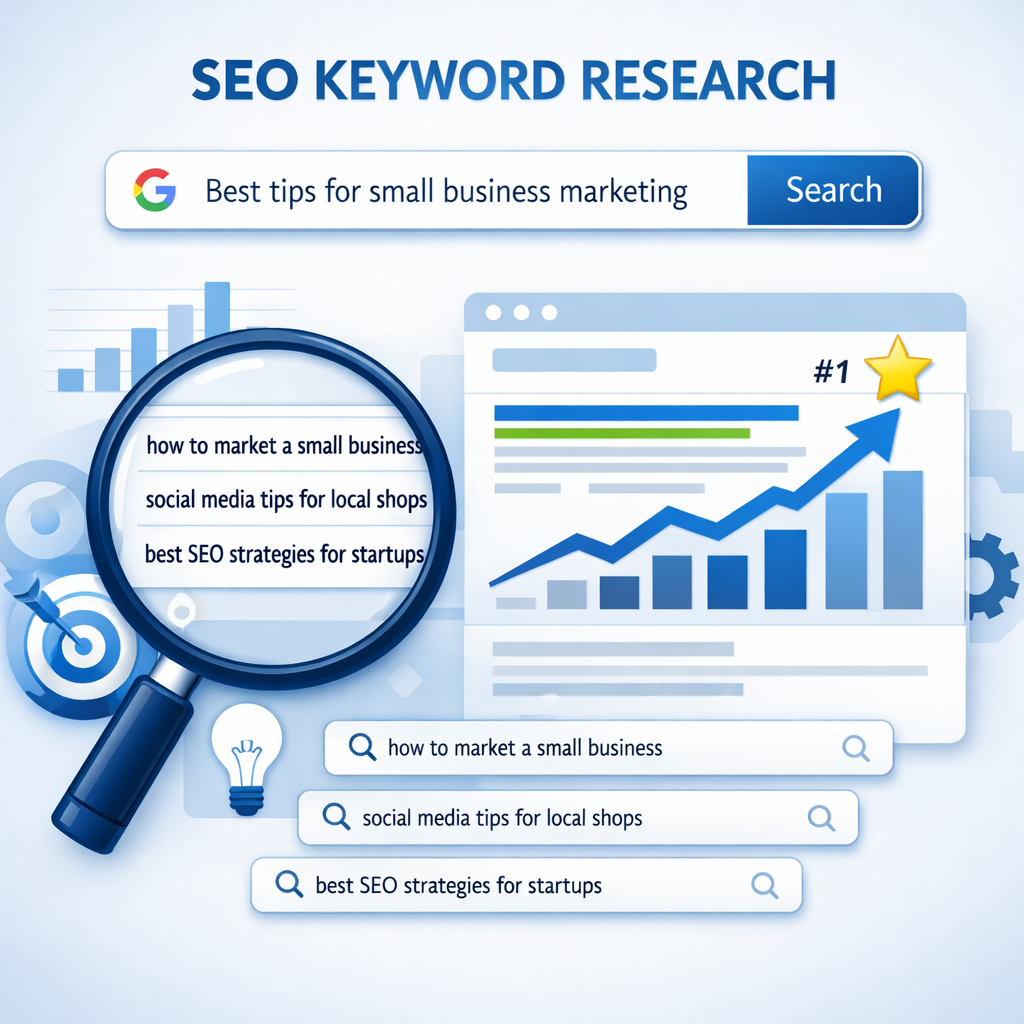
Keywords – Your Secret Guide to Getting to the Top of Search Results
The secret lies in the keywords, or what is known as long-tail keywords. In the world of digital content, search is no longer limited to single words such as shoes or coffee, but has become more like everyday conversation, especially with the development of artificial intelligence tools. People are now searching with natural and specific terms like: Where can I buy the best light running shoes in Riyadh. These long phrases are your key to attracting the ideal customer who has a clear purchase intent.
In this article, we'll simply explain to you what keywords are, why they're your secret weapon in SEO, and how you can find and use them intelligently to top search results and double your sales.
What is a Keyword Phrase?
A keyword, or keyphrase as some call it, is simply a longer and more specific search term than a single keyword.
Let's understand the difference simply:
|
Type |
Example |
Word Count |
Researcher's Intention |
Competition |
|
Short-tail Keyword |
Shoes |
1-2 |
Very general, you may be looking for photos or history of shoes. |
Very high |
|
Long-Tail Keyword |
Best Light Running Shoes for Beginners |
3-5+ |
Very specific, looking for a specific product to buy. |
Low to medium |
Keywords are usually made up of three or more words. They reflect the customer's intent much clearer. Instead of looking for dogs, you might be looking for the best teething toys for a Chihuahua puppy. This identification is what makes the keyword phrases of immense value for small and medium-sized business owners.
Long keyword phrases account for about 70% of total internet search traffic [1]. This means that focusing on them opens up a huge door of visitors that are ignored by your big competitors who focus on shortwords with high competition.
Why are keywords your secret weapon in SEO?
Success in SEO isn't about quantity, it's about quality and intelligence. Here are the reasons why keywords are the smartest choice for your blog or online store:
-
Less competition, and greater chance
when you're trying to compete for a word like marketing, you're competing with thousands of big companies and websites that have spent millions of dollars on that term. But when you target a phrase like the best content marketing strategies for small stores, the competition drops dramatically. This gives your site a real chance to appear on the first page, and even in the first place. -
Higher Purchase Intent
Keywords indicate that the researcher has reached an advanced stage in the funnel marketing funnel.-
Informational Intent Finder: Might be looking for what is cold coffee?.
-
Buyer of Transactional Intent: Will look for the price of the XYZ brand cold brew coffee maker.
Keywords often focus on purchase intent or specific action. When a customer writes the best pet store near me, they're ready to buy, and you want to be the first to show up.
-
-
c. Compatibility with natural and intelligent search
With the development of search engines and artificial intelligence tools, people are searching in a way that is closer to conversation. Instead of writing Dubai weather, they might ask: Will the weather be suitable for swimming in Dubai tomorrow?. Long keyword phrases are perfectly in line with this natural search pattern, making your content more likely to appear.
How to Find the Best Keywords for Your Site?
Keyword search is not a guessing process, but rather a science based on tools and analysis. Here are practical steps to find hidden word treasures:
Step One: Analyze Your Current Site 's Domain Analysis
Before you start looking for new terms, look at what's actually working for your site.
-
Use free analytics tools: Google Search Console is your best friend here. This free tool from Google tells you exactly what words and phrases your site appears in search results, how many clicks you get, and what your average ranking is.
-
Look for phrases that perform well: Focus on phrases that get a lot of impressions but few clicks. This means you're close to appearing, and you only need a slight improvement in the title or description to hijack clicks.
Step Two: Search for Long-Tail Variations
Now it's time to hunt for new treasures.
-
Use word search tools: There are free and paid tools to help you with this process, such as KWFinder, Semrush, or Ahrefs. You can enter a general idea such as backpacks, and the tool will display thousands of long-tail relevant keywords, such as: school backpacks for girls in high school or light backpacks for hiking.
-
Focus on search volume and competition: Look for terms for which a reasonable monthly search volume is usually less than 1000 monthly searches but for which the level of competition is low. These are golden opportunities that you can easily exploit.
-
Trick People Also Ask: Don't forget to use Google itself! When you search for a specific word, you'll find the People Also Ask or Related Searches section. These questions are ready-made keyword phrases that you can directly convert into titles for your blog articles.
Step Three: Understand the Researcher's Intent The
most important step is to think like a customer. Why is the customer searching for this phrase?
|
Researcher's Intention |
Objective |
Example of a Keyword |
The right type of content |
|
Informational |
He wants to know something. |
What are the benefits of argan oil for hair? |
Articles, Guides, Explanations |
|
Commercial |
He wants to compare products before buying |
Comparison of Samsung S25 and iPhone 17 |
Reviews, Comparisons, Best Lists |
|
Navigational |
Wants to access a specific location |
Log in to my Amazon account |
Contact Us Page, Login Page |
|
Buy Transactional |
Ready to Buy |
Buy Original Argan Oil in Jeddah |
Product Pages, Landing Pages |
Make sure that the content you write exactly matches the researcher's intent. If he's looking for a purchase intent, don't just give him an informative article.
How do you use keywords professionally in your content?
Now that you've found the perfect keywords, how do you ensure that Google sees and understands them?
Optimize the basic elements of On-Page SEO
Your keyword should be in the most important places on the page:
-
Meta Title: It should include the entire keyword, preferably at the beginning of the title. This is the title that appears in the search results.
-
Meta Description: The keyword must be included at least once. This description encourages the researcher to click on your link.
-
Headline H1: This is the largest headline that a visitor sees within the page. It should include the keyword, preferably the title of the page.
-
URL Slug URL: The last part of the page link such as: /best-running-light.It should be identical to the keyword, using dashes – instead of spaces.
Integrating it intelligently into the content of the article
The biggest mistake is keyword stuffing, i.e. over-repeating the phrase. Google is smart enough to know that you're trying to scam it, and this will hurt your ranking.
-
Golden rule: Use the key phrase naturally and comfortably for the reader.
-
In the opening paragraph: The keyword should appear in the first 100-150 words of the article.
-
In H2, H3 subheadings: Use them in some subheadings to segment content.
-
In the body of the article: Distribute them naturally in paragraphs, and use synonyms and related LSI Keywords to enhance Google's understanding of your topic.
Keywords are
not only used for free SEO, but are the foundation of your Google Ads advertising campaigns. You can use it to determine who sees your ad:
-
Exact Match: Your ad only appears when the searcher types in the exact phrase as it is, e.g., light running shoes.
-
Phrase Match: The ad appears when your search term includes your keyword, even if there are additional words before or after it, such as: Buy light running shoes now.
-
Broad Match: The ad appears for anything related to the phrase, even if it's completely different, such as sneakers.
-
Negative Keywords: Don't forget to add negative words like free, cheap, used if you're selling luxury products, to ensure that your ad doesn't show up to people looking for low-cost options.
How do you measure the success of your keyword phrases?
The work doesn't end once the article is published. You should constantly monitor the performance of your keyword phrases.
-
Rank tracking: Use tools like Google Search Console to see your page's ranking for your target keyword. Are you on the front page?
-
CTR: If you rank well in the top five but have a low click-through rate, your title or meta description is unappealing and needs improvement.
-
Analyze visitor behavior: Use your store's analytics like Shopify analytics or Google Analytics to see what visitors do after they arrive from this phrase. This tells you if the ferry is bringing in the right visitors.
Keywords are the foundation of a successful digital marketing strategy. It gives you a competitive edge, connects you to customers with real purchase intent, and aligns with their natural search method. Start today by analyzing your site, find the long-tail phrases that work for your customers, and intelligently integrate them into your content. With continuous monitoring and improvement, you'll find that your site climbs the search results ladder with confidence, and achieves the desired success.
Add New Comment