How do you bring back your visitors and double your sales?
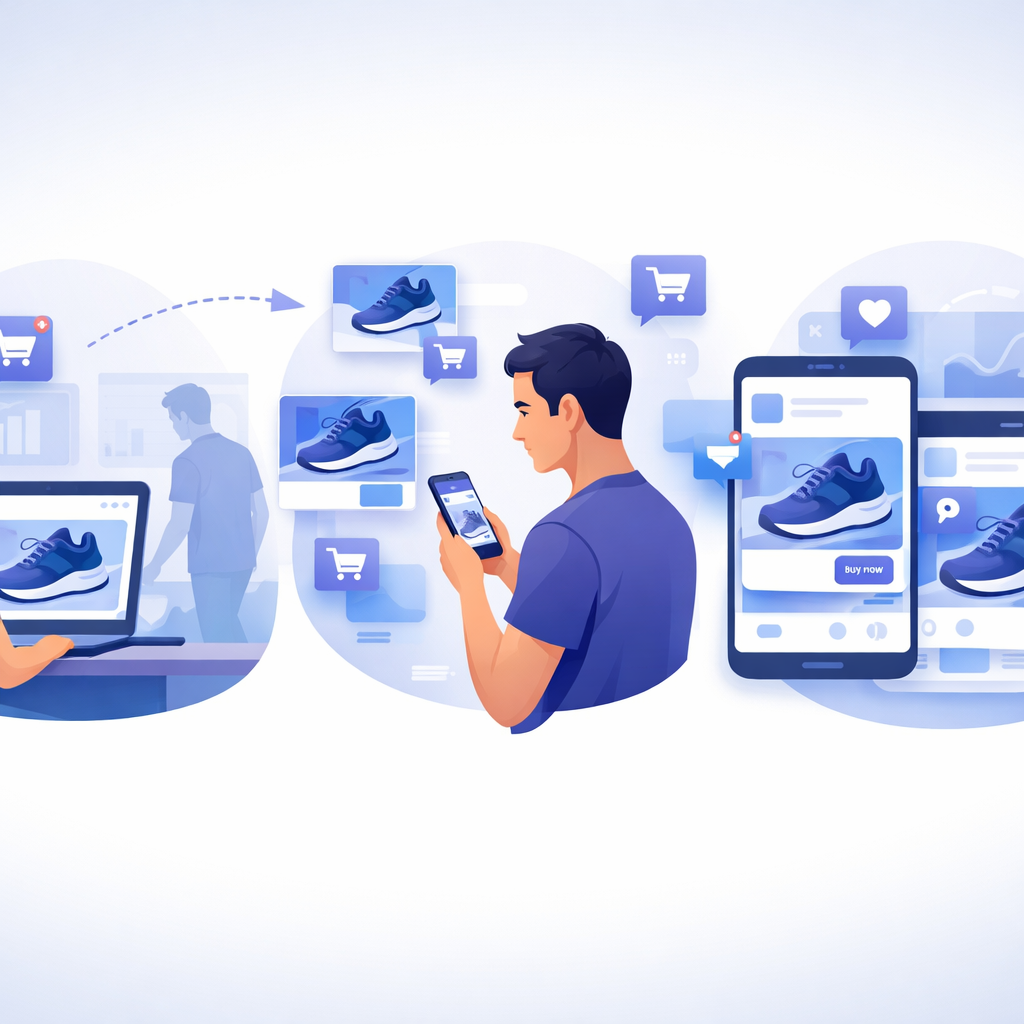
Imagine you're browsing an online store looking for a new sneaker. You liked one of the designs, you read its specifications, and you may have added it to the shopping cart, but suddenly your phone rings, or you are busy with something, so you close the site and leave. An hour later, as you browse your Facebook account, you find an ad for the same shoe you were watching! Then you open another app, and you see the shoe appear to you again. What you've been exposed to is one of the smartest modern digital marketing strategies, called retargeting campaigns. In this article, we'll explain everything you need to know about this technology and how it can transform your online store from a site that people visit and leave, to a real vending machine.
What are retargeting campaigns simply?
Simply put, retargeting is a way for website owners and businesses to show their ads to people who have already visited their site but left without completing the purchase or registration. Think of it as if you actually own a shop; a customer came in, looked at the goods, asked for the price, and then walked out without buying. In the real world, you may never see it again. In the digital world, you can send him a nice reminder as he walks down another street or browses another website, saying, "Hey, are you still interested in that shoe?
How does this technique technically work without complexity?
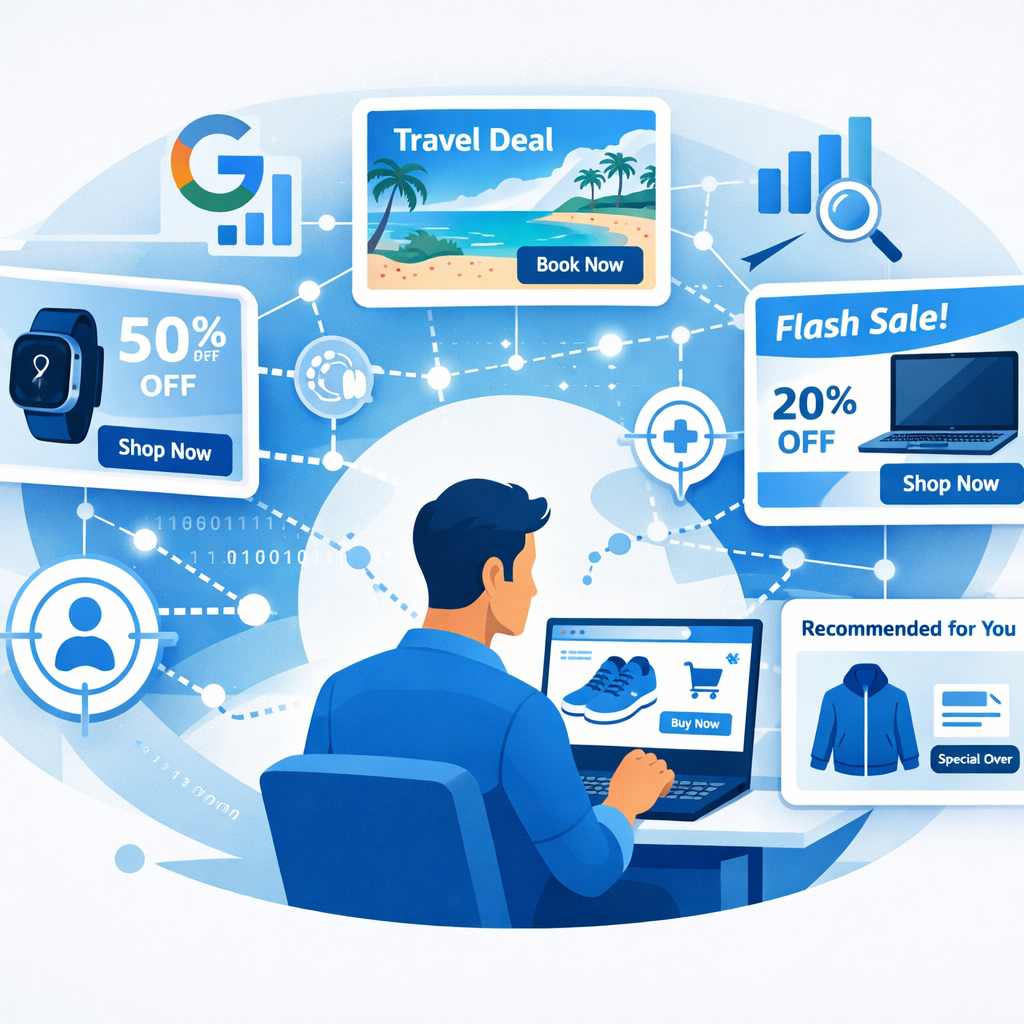
When someone visits your site, a very small piece of code called a pixel or cookie is placed in their browser. This code doesn't harm the device or steal personal data, but rather acts like an invisible sticker that tells advertising platforms like Google or Facebook that this person has visited your site and was interested in a particular product. When that person goes to other sites, the ad platform recognizes that sticker and shows them your ad based on what they've seen on your site.
Why do we need to retarget?You
might be wondering: why bother chasing visitors?. The answer lies in the numbers:
-
The 97% rule: Studies show that around 97% of visitors who enter an online store for the first time leave without buying anything. If you rely solely on the first visit, you're wasting 97% of your marketing budget.
-
The decision takes time: Especially in expensive goods such as furniture, cars, or electrical appliances, people don't buy the first time. The client needs to compare, think, and consult with parents. Retargeting keeps you in his memory throughout this period of reflection.
-
Trust doesn't come instantaneously: The first time a customer sees your brand, they may be skeptical. Seeing your ad a second and third time on trusted sites gives the impression that your company is large and professional, which gradually builds trust.
-
Cost lower: The CPC in retargeting campaigns is often much lower than in regular campaigns, because you're targeting a warm audience that already knows you, not a cold audience that sees you for the first time.
Why do visitors leave your site without buying?
Before you start retargeting them, you should understand why they left in the first place. Here are the top reasons:
-
Distraction: The customer may be on the bus, at work, or simply ring the doorbell. Distraction is the number one enemy of e-commerce.
-
Price comparison: The smart customer looks at 3 or 4 locations before deciding. Retargeting ensures that you will be the last option he sees before making a decision.
-
Surprise shipping costs: The customer adds the product to the basket, and when he sees the shipping price, he decides to back down. Here you can retarget it with a free shipping offer.
-
Fear of product quality: Especially if the store is new. Here you can retarget it with real Social Proof customer reviews.
The difference between retargeting and remarketing
The two terms are often confused, and although they aim for the same thing, there is a slight difference in the means:
-
Retargeting: Often relies on paid ads that appear to a visitor on social media sites or search engines after they leave your site.
-
Remarketing: Often relies on email. For example, if you have a customer's mail and they add a product to their cart and then leave, send them a reminder email.
Both are essential, and using them together brings the best results.
Types of retargeting campaigns
don't just show the same ad to everyone, they need to be smart. Here are the most common types:
-
General Retargeting here shows a public announcement about your store to everyone who has visited any page on your site
This type is good for increasing brand awareness, but it's not the most effective at selling. -
Dynamic Retargeting
This is the magic kind. If a customer sees a black wristwatch, they'll see an ad that contains the exact same black watch, not just a generic store ad. This type achieves the highest conversion rates because the message is very personalized to the customer's attention. -
Retargeting the Abandoned Cart
These are the golden customers. They chose the product and put it in the basket, which meant they were about to buy. Targeting these with a small discount or free shipping often succeeds in getting them back to complete the process.
How do you build a successful retargeting campaign?
To avoid turning from a savvy marketer to an annoying supplement, follow these tips:
-
Don't be like setting a frequency cap
One of the biggest mistakes is that your ad shows the customer 50 times a day. This will make them hate your brand. A so-called Frequency Cap should be specified, i.e. the ad should appear a maximum of 3 to 5 times a day. -
Exclude those who have already bought!
Imagine that you bought a shoe yesterday, and today you see an advertisement that says Buy this shoe now! This is very annoying and shows unprofessionalism. Make sure your campaign is set to exclude people who land on the thank you page for your purchase. -
Provide a reason to return
If a customer leaves your site because of the price, showing them the same price again won't change their mind. Try offering him: a
10% discount code, a buy one and get the other one for free, testimonials from previous customers to increase trust, a reminder that the quantity is about to run out, creating a sense of urgency. -
Diversity in designs
doesn't just use one image. Try a short video, then a photo of the product, then a photo of someone using the product. Variety breaks boredom and attracts attention.
Platforms where you can start
Where should your retargeting ads appear?
-
Google Ads: Allows you to appear on millions of websites and apps that people use every day, in addition to YouTube.
-
Meta Facebook and Instagram Group: Best for reaching people in their free time and browsing socially.
-
TikTok and Snapchat: Great platforms to reach young people through short videos and fast-paced interactive content.
Common mistakes that beginners fall for avoid!
-
Start with a very small audience: If your site is only visited by 10 people a day, your retargeting campaign won't work. You need a sufficient number of visitors at least 1000 visitors per month to start the campaign effectively.
-
Neglect the landing page that the customer lands on Landing Page: If the customer clicks on the shoe ad, they should go directly to the shoe page, not to the homepage of the site.
-
Not changing ads: If a customer sees the same ad for a whole month, they will develop what is called ad blindness and will no longer notice it.
-
Ignore the mobile version: Make sure your ads and site pages work perfectly on smartphones, as most retargeting takes place there.
How do you measure the success of your campaign?
It is not enough to launch the campaign and wait, but you should keep an eye on these numbers:
-
CTR: How many people clicked on the ad among those who viewed it? In retargeting, this number is typically higher than in regular campaigns.
-
CPA: How much did it cost you to get one customer who actually made a purchase?
-
ROAS: If you spend $100, how much do you make in return? In successful retargeting campaigns, this number can be as high as 10 or 20 times.
Retargeting Challenges in 2026 Privacy
We must be honest; the world is changing. With iPhone iOS system updates and data protection laws, tracking users is a little harder than before.
But this doesn't mean the end of retargeting, it means that you should:
-
Focus on collecting your private data such as email and phone numbers with customer consent.
-
Providing valuable content that makes the customer want to return to you voluntarily.
-
Use state-of-the-art tracking tools that comply with new privacy laws.
Real-life examples of success stories
-
Clothing store: Targeted people who left the basket with a 15% discount for just 24 hours. The result? It recovered 20% of the sales that were lost.
-
Tourism Agency: Showed photos and videos of tourist destinations to people who searched for airline tickets. The result? Bookings increased by 30% compared to regular ads.
Start now and don't leave your money on the table
Ultimately, retargeting campaigns are not just a marketing luxury, they are a necessity for any business that wants to grow in the digital age. It is the most cost-effective way to convert interested people into buyers. Always remember: a customer who has visited your site once is a small treasure, so don't overdo it easily. Use retargeting smartly, simply, and respecting customer privacy, and you'll see for yourself how your sales numbers change for the better. Start with a simple experiment on a single platform, monitor results, and learn from your customers' behavior. Success lies in keeping visitors and keeping them coming back.