
Defense Against Advanced Social Engineering Attacks
Social engineering is the art of manipulating human minds, not hacking systems. Attackers exploit human trust to trick individuals into revealing confidential information or carrying out acts that harm their security. In the digital age, these attacks have evolved into advanced social engineering attacks. These new attacks are more precise, persuasive, and dangerous, as attackers use artificial intelligence and big data to create deception scenarios tailored to each victim, making it nearly impossible to distinguish between fact and fiction. Understanding these new tactics and how to defend against them is an absolute necessity, and this is what we will reveal in this article.
Understanding Advanced Social Engineering
The fundamental difference between traditional and advanced attacks lies in the level of customization and complexity. The attacker no longer sends a random public message. It focuses on a single victim or a small group, and spends a lot of time gathering information to build an irresistible story.
Precision Targeting and Complex Storytelling
The most prominent feature of advanced social engineering is precision targeting. The attackers use techniques such as targeted phishing and whaling. Detailed information about the victim is collected from open sources OSINT as their LinkedIn profiles and corporate records. This amount of information allows for the creation of a message that looks incredibly personal and authoritative.
For example, an executive might receive an email that appears to be from the chairman, indicating confidential details about an acquisition deal, and asking for an urgent and confidential transfer of money. Combining real details with an urgent request is what makes an attack effective. This is known as camouflage or pretexting, where a complex scenario is built to instill trust.
Deep Impersonation and AI
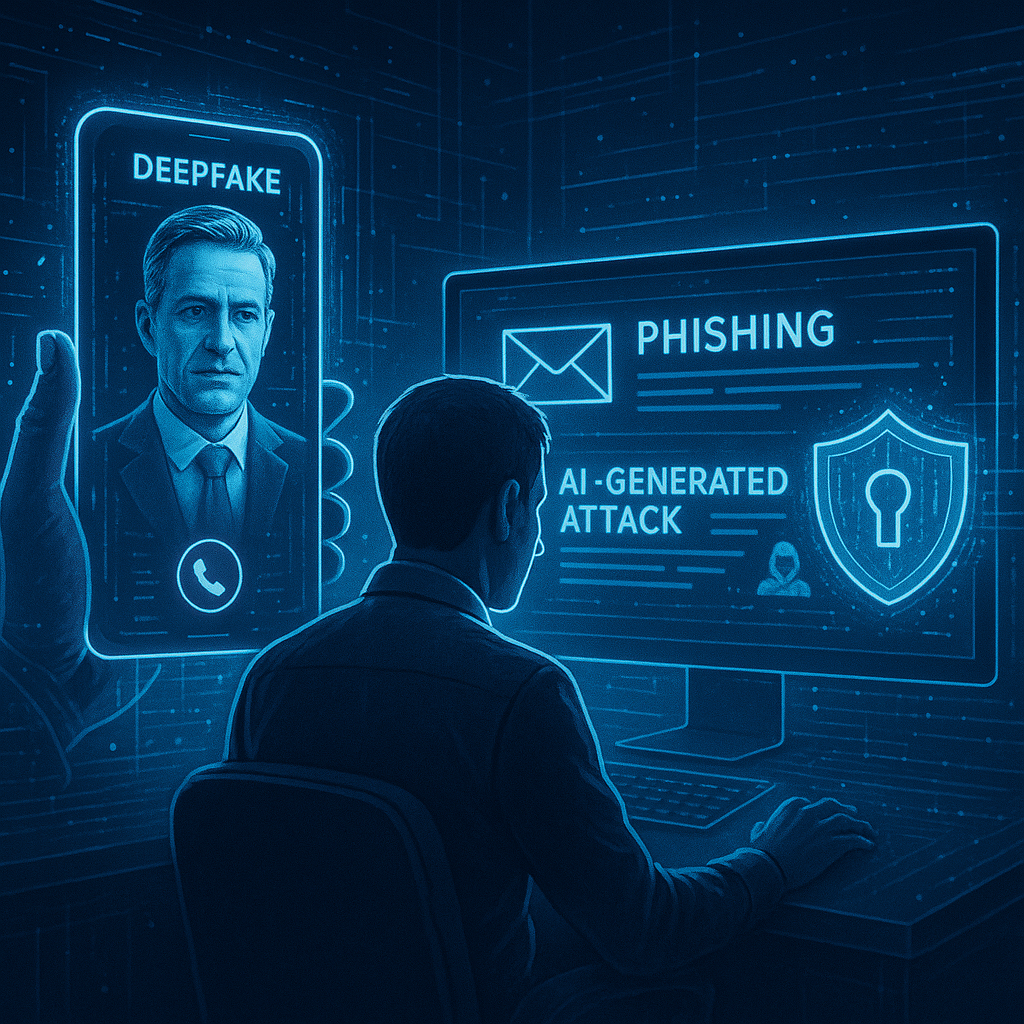
The latest threat is the use of deepfake techniques. Impersonation is no longer limited to a fake email, but attackers can use AI to mimic someone's voice with astonishing accuracy, including their tone and accent.
Imagine you receive a phone call with your CEO's voice, asking for a money transfer or revealing a password. The sound is exactly identical, and the demand is urgent. This type of AI-powered Vishing scam is a formidable challenge, and it removes our most important means of verification: voice recognition.
Supply chain attacks are also becoming more common. Instead of attacking the main target, attackers attack a smaller, trusted company as a software vendor to gain access to the target's network. This adds a layer of complexity, as the message comes from an already trusted source.
|
Advanced Attack Type |
Simplified Description |
Example of a tactic |
|
Spear Phishing |
Messages tailored to a single victim or a small group. |
An email from the manager requesting a review of a confidential project file. |
|
Whaling |
Target senior executives, bosses, and managers. |
Request an urgent financial transfer from the Chairman of the Board of Directors to complete a transaction. |
|
Deepfake |
Using AI to mimic the voice or image of a trusted person. |
A phone call with the CEO's voice to request sensitive information. |
|
Pretexting |
Construct a complex and detailed story or scenario to deceive the victim. |
Impersonating a tax investigator requesting immediate financial documents. |
The attacker's psychological weapons.
Advanced attackers are amateur psychologists. They don't rely on technical errors, but on human weaknesses, and they exploit our emotions to go beyond our logical thinking.
Exploiting the Principles of Influence
Attackers rely on six basic principles of psychological influence, documented in social psychology:
-
Authority: We tend to obey people in positions of authority, manager, administrator. Attackers take advantage of this by impersonating these characters. When you receive an order from the CEO, you're less likely to question the authenticity of the order.
-
Urgency: The most common weapon. A feeling is created that a disaster is imminent or that the opportunity will be lost if you don't act immediately. This pressure prevents the victim from stopping and thinking or validating the request.
-
Fear and Threat: The threat of dire consequences drives people to comply quickly.
-
Helpfulness: An attacker may pretend to be in trouble or need simple and urgent help. Exploiting people's desire to collaborate is an effective tactic, especially in work environments.
-
Scarcity & Greed: The promise of a great reward or exclusive information exploits human greed and makes the victim ignore the signs of danger.
-
Social Proof: Suggesting that everyone is doing this to reduce resistance.
The Role of OSINT Open Data
The fuel that powers these psychological weapons is information. Advanced attackers are experts in using OSINT, where everything you post helps build an accurate profile of you.
For example, if you post on LinkedIn that you're working on a new project, an attacker can use this information to create a targeted phishing message that looks like it's from that company, increasing its credibility. They use this data to personalize the taste, making the message seem like a natural part of your career context.
The first line of defense
in the face of these attacks, you can't rely solely on technology. The first and most important line of defense is the trained human mind. We must go from easy targets to skeptical investigators.
Critical thinking as a shield
The first step in defense is to stop and think. Attackers rely on urgency to prevent you from using your critical thinking. When you receive an unexpected or urgent request, tap the pause button in your mind.
Ask yourself these crucial questions:
-
Does this request make sense in this context? Is it normal for a manager to ask for a large amount of money to be transferred via email?
-
What emotion is this request trying to exploit? If the demand is playing on your emotions, it's very likely an attack.
-
Can I independently verify this request? This is the golden rule.
The Golden Rule: Never Trust, Always Check
This rule should become a basic principle. Don't trust any sensitive request that comes through a single means of communication: email, call, text message.
-
Verify the source via a different communication channel: If you receive an email from the manager requesting a money transfer, contact the manager on their known number. If you receive a call from the bank, hang up and call the official number printed on your card.
-
Review the small details: Look for inconsistencies. Is the signature the same as the previous signatures?
-
Dealing with deepfakes: If you receive a suspicious audio or video call, ask the person to do an unexpected action or answer a personal question. Deepfakes techniques may not be able to react naturally to unexpected questions.
Ongoing training and attack simulation
For organizations, awareness is not enough. There should be ongoing training and simulation of phishing attacks periodically to identify human vulnerabilities. An effective reporting policy also encourages employees to report anything suspicious, allowing the organization to respond quickly to ongoing attacks. These strategies, which include stop-and-frisk, and double-checking, are essential to break the cycle of urgency and defeat attacks of impersonation and deepfakes.
Second Line of Defense: Tools and Techniques
While awareness remains the first line of defense, technology plays a crucial role as a second line of defense that prevents attacks from reaching you, or limits damage if an attacker succeeds in tricking you.
Multi-Factor Authentication (MFA
) The most important technical procedure is Multi-Factor Authentication (MFA). Even if an attacker succeeds in stealing your username and password, MFA ensures that they can't access your account without a second verification agent. This action is the last barrier that fails most social engineering attacks.
Advanced Email Filters
Email filtering systems have evolved tremendously. It's no longer just searching for keywords, but using AI to analyze message behavior, compare the actual sender's address, and look for suspicious links or malicious attachments.
-
Domain Spoofing Protection: Technologies such as DMARC, SPF, andDKIM help verify that email is coming from the correct server.
-
Analyze message behavior: Modern systems can detect an email that looks like it's from your manager, but is sent from a server in a foreign country.
Password management and software update
-
Password Managers: Using a password manager ensures that all of your passwords are strong and unique, preventing an attacker from using a stolen password to gain access to your other accounts.
-
Software and systems modernization: Attackers often combine social engineering with exploiting technical vulnerabilities. Keeping all your software up to date fills these gaps and reduces the chances of a composite attack succeeding.
Personal cybersecurity as part of defense
We must recognize that our personal and professional lives are intertwined. Any breach of your personal security could be used by an attacker as a stepping stone for an advanced attack on your organization. Therefore, investing in personal cybersecurity is an investment in your organization's security.
Advanced social engineering attacks have become the biggest security threat, targeting the weakest link: humans. Attackers have gone beyond naïve messaging, and are now using artificial intelligence and big data to create complex and compelling deception stories. Defending against these attacks requires you to be a critical thinker and to adopt the principle of healthy skepticism as a daily habit. When you receive an unexpected request or feel pressured to act quickly, you should stop. Always remember: no request is so legitimate and urgent that it cannot be verified via an independent communication channel. By combining trained awareness, adherence to a never-trust, always-on rule, and the use of technical tools such as multi-factor authentication, we can transform ourselves and our organizations into impregnable fortresses. It's an ongoing battle, but with knowledge and vigilance, we can win.