 English
 العربية

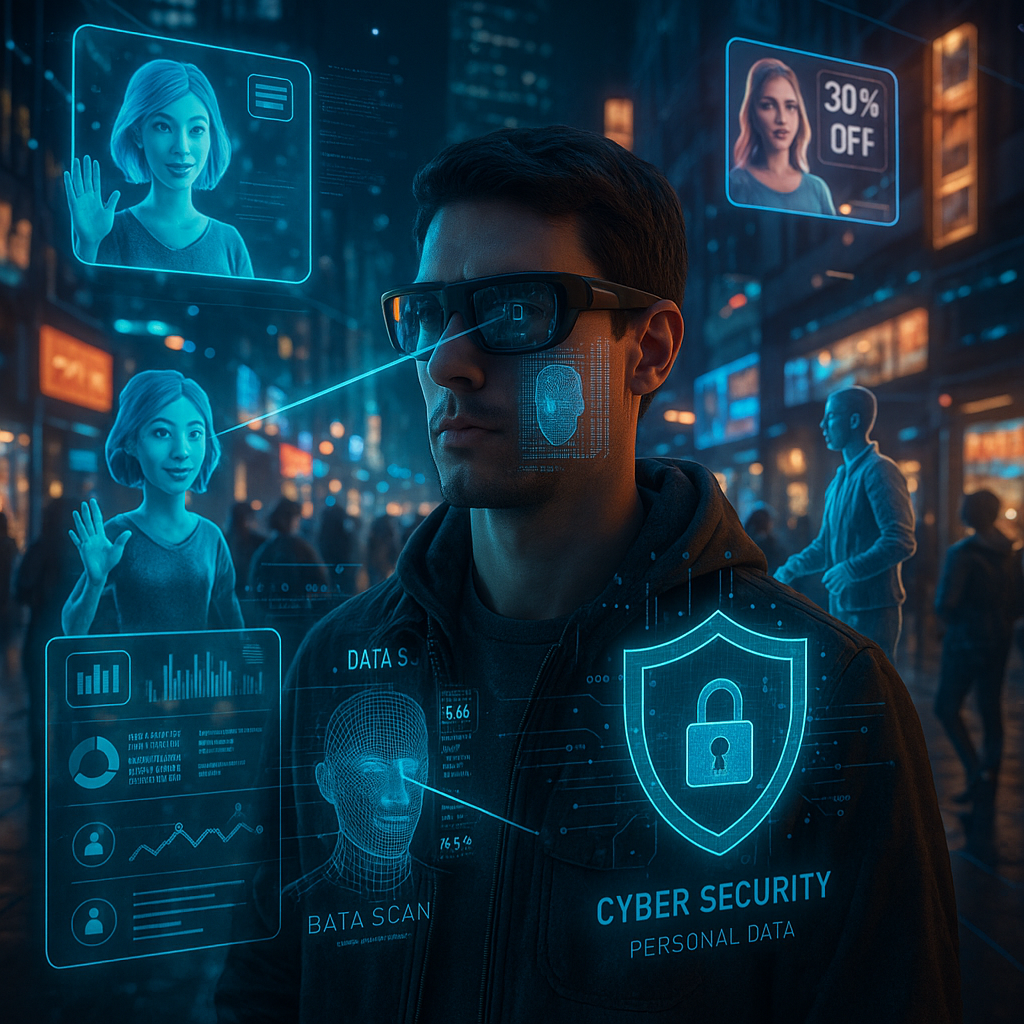
Data security in the metaverse and augmented reality.
Imagine waking up in the morning, wearing your smart glasses, and suddenly the reality you see with your eyes blends with a magical digital layer. You see personalized ads floating in front of you on the street, and you interact with your colleague who appears as a 3D avatar in your living room. This is not a scene from a sci-fi movie, but rather the future that the metaverse and AR promise.
We are on the cusp of a real technological revolution, where the internet is no longer just screens to browse, but a virtual world in which we live and interact. The metaverse is this shared virtual world, which combines technologies such as virtual reality (VR) and augmented reality, to create a continuous digital space. Augmented reality is the technology that adds digital elements to our real-world environment, via devices such as smartphones or smart glasses.
This incredible development opens up limitless prospects for work, education, leisure and trade. But it does raise a fundamental question: What price are we paying for this immersive experience?
In this new world, data becomes the fuel that powers everything. Every movement, every look, every interaction is recorded and analyzed. Talking about data security, privacy in the metaverse and augmented reality is a paramount necessity to ensure a secure and reliable future for all.
Data Mine: What Does the Metaverse and Augmented Reality Unite?
If you think your smartphone is collecting a lot of data about you, be prepared for a shock. The devices that will transport you to the metaverse and augmented reality are designed to collect vast amounts of personal and sensitive information, beyond what current technologies collect.This data is not just your name and email address, but precise details about your human being and behavior.
The data collected in this parallel world can be divided into three main types:
First: Traditional data and transactions:
This is the data we're used to, such as login details, payment information for buying NFTs or cryptocurrencies, and your transaction history. This data is important, but it is not the most sensitive.
Second: Biometric Data Body Measurements:
This is where the biggest danger lies. VR and augmented reality devices need accurate measurements of your body to function efficiently, including:
-
Eye Tracking: Companies know exactly where to look, and how much time they spend looking at a particular object. This reveals your interests, desires, and even your state of mind.
-
Hand and voice print: Devices may need to recognize your hand or tone of voice to verify your identity. This biometric data is unique and cannot be changed, and stealing it means that your biological identity has been stolen.
-
Facial expressions: Some devices record your facial expressions to reflect them on your avatar, which means the system knows when you're smiling, angry, or bored.
Third: Movement, Behavior, and Environment Data:
This data paints a comprehensive picture of your daily life:
-
Body language and movement: The way you gait, sit, and your hand movements are recorded. This data can reveal your health status or even your psychological tendencies.
-
Emotional Data: By analyzing eye movement, tone of voice, and facial expressions, systems can infer your emotional state. This emotional reasoning is a treasure trove for advertisers and marketers, but it's a profound invasion of privacy.
-
Scan the surroundings especially in augmented reality: When you use AR glasses in your home, they 3D scan your room, including furniture, paintings, and even other people in the room. This means that the eyewear developer has an accurate map of your own space.
In short, the data collected by this new world forms a unique and comprehensive digital footprint that is unprecedented and unprecedented, revealing not only what you do, but who you are, and how you feel.
Security Challenges: Backdoors to the Virtual World
With such a large amount of sensitive data, security risks increase exponentially. Every new touchpoint is a potential target for hackers and cybercriminals.
-
Hacking AR/VR Headsets:
VR devices are the main gateway to this world, and it's a major weakness. These devices are small computers that are head-mounted and permanently connected to the internet. If your device is compromised, a hacker can access your stored data, built-in cameras, and microphones, allowing them to spy on you in the real world. Vulnerabilities in its software could also open backdoors for hackers to gain access to sensitive biometric data. -
Avatar Identity Theft:
In the metaverse, your identity is your avatar avatar. This avatar represents who you are, and may be associated with precious digital assets or your true identity. If someone can steal and control your avatar, they can commit fraud in your name, tarnish your reputation, or gain access to your financial accounts associated with it. This type of theft is more dangerous than password theft, as it steals your entire digital entity. -
Financial Fraud and Crypto Risks:
The economics of the metaverse rely heavily on cryptocurrencies and NFTs. These technologies, while innovative, lack adequate regulation and legal protection. Financial scams, such as pulling the rug on crypto projects, or stealing crypto wallets, are quite challenging. The absence of a central dispute resolution body also makes the recovery of stolen funds nearly impossible. -
Malware and phishing in a 3D environment:
Hackers quickly adapt to new environments. Instead of a fraudulent email, you may see a fake avatar within the metaverse claiming to be a technical support worker and asking for your information. Or malware may be hidden inside digital assets that you buy and enter into your private space, so that it can start stealing your data. Phishing in an immersive 3D environment will be even more compelling and dangerous.
Privacy challenges: Constant surveillance without limits
Privacy is the other side of security. If security is about protecting data from theft, privacy is about protecting your right to control that data and prevent it from being used in undesirable ways.
-
Continuous Monitoring and Emotional Inference:
As mentioned, the metaverse devices record everything. This means that developers have a complete record of your virtual life: who you met, where you went, what you bought, and what your emotional reactions were to it all. This level of surveillance threatens our freedom and independence. If a company knows you're feeling stressed or sad, they can use that information to target specific ads or content to you, influencing your decisions and behavior. This is the essence of the danger of emotional inference. -
Lack of global regulation and legislation:
The metaverse is a space that transcends geographical boundaries. While data protection laws exist in certain countries such as the GDPR in Europe, applying these laws to a virtual world run by global companies and involving users from everywhere becomes very complicated. We need a uniform global legal framework that defines liability and guarantees the rights of users, especially with regard to sensitive biometric data. -
Bystander Privacy:
This challenge is specific to augmented reality. When you wear AR glasses in a public place, you record and collect data about your surroundings, including other people who don't use the technology. You record their faces, voices, and locations. These viewers have not consented to their data being collected, but they become part of your database. How can the privacy of someone who has not been involved in this digital world but become part of it be protected?
Solutions and Responsibility: How to Protect Ourselves?
These challenges should not be a reason to fear the future, but rather to motivate action. Data protection in this new world is a shared responsibility of three main parties: the user, the developer, and the regulator.
First: The role of the user Personal responsibility:
You are the first line of defense. You must be conscious and discreet in your dealings with this world:
-
Be stingy with data: Apps don't give more permissions than you need to work. If a game app asks for access to your precise location data or scans your room, think twice.
-
Use security tools: Turn on MFA on all your accounts, and use strong, unique passwords.
-
Update hardware and software: Always make sure your device's operating system and software are up to date, as updates often plug discovered vulnerabilities.
-
Read privacy policies: We know they're boring, but try to understand what you're agreeing to. Look for data minimization policies that companies adhere to.
Second: The role of developers and security companies by design:
Companies that build the metaverse must adopt strict ethical principles:
-
Privacy by Design: Privacy and security should be an essential part of product design from the start, not just a later addition.
-
Reduce data collection: Businesses must commit to collecting the minimum amount of data necessary to operate the service. If the feature can be turned on without eye movement, it should not be tracked.
-
Advanced encryption: Using end-to-end encryption to ensure that sensitive data, especially biometrics, can only be read by the user themselves.
Third: The Role of Governments and Regulators in Global Legislation:
This enormous space cannot be left unorganized. Governments must act quickly:
-
Setting global standards: Working on a uniform international legal framework for data protection in virtual environments.
-
Regulation of biometric data: Placing strict restrictions on the collection, storage, and use of biometric data, as a special category of data that requires the highest levels of protection.
-
Limitation of Liability: Determining who bears legal responsibility in the event of a breach or violation of privacy within the metaverse.
A Secure Future or Digital Chaos?The
metaverse and augmented reality represent a quantum leap in human history. They promise immersive experiences that will change the way we work, communicate and learn. But that promise will only come true if we can build this world on a solid foundation of trust and security. The challenges facing us today are unprecedented and require us to be more aware and careful.
Ultimately, consciousness remains the first and last line of defense. We must demand that companies be transparent, press governments to legislate, and commit ourselves to protecting ourselves. Advocating for a balance between innovation and protection is our key to a secure and prosperous digital future.
Comments
Hi there! Wishing you a great day ahead.
Hello, I offer financial backing to quality websites. Your platform appears worthy of support. Would you like to discuss possibilities? Please contact me on WhatsApp +79883894226‬
Hi there! Wishing you a great day ahead.
п»їI provide private grants to help people achieve their goals. If you have a project or a personal need, message me on WhatsApp +66838202152
Add New Comment